
How To Get True Course On Foreflight
How To Get True Course On Foreflight - The declination of the ocn vor is 15e (determined in 1965.), making for a mag course of 301, hence the use of the 301 radial from v23. True headings are displayed automatically, as magnetic compasses become unreliable in these regions. Foreflight offers several ways to access true course information: You're supposed to be allowed a plotter and even a digital flight computer as long as the memory can be cleared. When you do so, under the crs (course) in foreflight it shows 230 m. The beauty of foreflight is that you can annotate directly on the map or chart. The true course from ocn to kelps (first point on v23) is 316. In canada (north of 63.5°n): Now let's look at the modern day gps. True course is measured with a navigation plotter and a sectional map. 5/5 (30k reviews) You can use a e6b or similar flight computer and forecast winds aloft to correct your true course to determine a true heading. Foreflight’s default behavior is to download and apply winds aloft forecast data to your flight plan in order to generate a proposed magnetic heading for you to fly. To answer your other question, forecast winds and temperature aloft charts (fd) are given in reference to true north. Tap the etd button on the lower right. Foreflight offers several ways to access true course information: Is there any way to get foreflight to display magnetic course when planning a route for purposes of determining the proper vfr altitude i need to fly? On foreflight, it is true that the navlog displayed on the map view of fpl only shows magnetic heading, but, if you go to flights and tap the full navlog, the magnetic course for each leg is displayed in the magnetic course column. To find the true course on foreflight, you will need to know the magnetic course, the wind direction and speed, and the drift angle. The true course from ocn to kelps (first point on v23) is 316. Select the edit button in the fpl viewer. Is there any way to get foreflight to display magnetic course when planning a route for purposes of determining the proper vfr altitude i need to fly? You can use a e6b or similar flight computer and forecast winds aloft to correct your true course to determine a true heading. On foreflight,. The true course is the direction of travel over the ground, taking into account the effects of wind and drift. To answer your other question, forecast winds and temperature aloft charts (fd) are given in reference to true north. Once you've created a flight plan in foreflight, the app automatically calculates the true course for each leg of your flight.. You draw an x below instead of above the centre. To answer your other question, forecast winds and temperature aloft charts (fd) are given in reference to true north. When you do so, under the crs (course) in foreflight it shows 230 m. You're allowed a plotter on the written test. Tap the etd button on the lower right. You're supposed to be allowed a plotter and even a digital flight computer as long as the memory can be cleared. To answer your other question, forecast winds and temperature aloft charts (fd) are given in reference to true north. To view course (crs) instead of heading (hdg) in the navlog on the maps page, set the estimated time of. True headings are displayed automatically, as magnetic compasses become unreliable in these regions. To find the true course on foreflight, you will need to know the magnetic course, the wind direction and speed, and the drift angle. The aircraft's course over the ground relative to true north. For a simple example, let's plot a course between two navaids, from tnv. You can calculate true course using true heading, tas, wind direction/speed. Once you've created a flight plan in foreflight, the app automatically calculates the true course for each leg of your flight. The true course from ocn to kelps (first point on v23) is 316. To view course (crs) instead of heading (hdg) in the navlog on the maps page,. You're allowed a plotter on the written test. Select the edit button in the fpl viewer. You should demand a refund from that flight school for screwing up your test. Now let's look at the modern day gps. Foreflight offers several ways to access true course information: You can use a e6b or similar flight computer and forecast winds aloft to correct your true course to determine a true heading. It gives you the true course just by aligning the center of the transparent protractor with the waypoint on the foreflight map and you can rotate it by an exact # of degrees for magnetic heading to. Open your flight plan in foreflight. True course is measured with a navigation plotter and a sectional map. You draw an x below instead of above the centre. On foreflight, it is true that the navlog displayed on the map view of fpl only shows magnetic heading, but, if you go to flights and tap the full navlog, the magnetic. You're supposed to be allowed a plotter and even a digital flight computer as long as the memory can be cleared. The declination of the ocn vor is 15e (determined in 1965.), making for a mag course of 301, hence the use of the 301 radial from v23. Satisfaction guaranteeleader in aviationquality pilot productssame day express shipping This is the. Open your flight plan in foreflight. On foreflight, it is true that the navlog displayed on the map view of fpl only shows magnetic heading, but, if you go to flights and tap the full navlog, the magnetic course for each leg is displayed in the magnetic course column. Foreflight’s default behavior is to download and apply winds aloft forecast data to your flight plan in order to generate a proposed magnetic heading for you to fly. True headings are displayed automatically, as magnetic compasses become unreliable in these regions. True course is measured with a navigation plotter and a sectional map. It seems that when i plan a route, it displays the magnetic heading with the wind correction angle. When you do so, under the crs (course) in foreflight it shows 230 m. In canada (north of 63.5°n): You're allowed a plotter on the written test. To view course (crs) instead of heading (hdg) in the navlog on the maps page, set the estimated time of departure (etd) more than seven days in the future following these steps: Satisfaction guaranteeleader in aviationquality pilot productssame day express shipping Once you've created a flight plan in foreflight, the app automatically calculates the true course for each leg of your flight. The aircraft's course over the ground relative to true north. Tap the etd button on the lower right. The true course from ocn to kelps (first point on v23) is 316. You can use a e6b or similar flight computer and forecast winds aloft to correct your true course to determine a true heading.
Video tip How to use the ForeFlight map weather layers iPad Pilot News

5 quick ForeFlight tips iPad Pilot News

Improved Traffic Alerting, Specify Approach Minimums on the Map, and More in ForeFlight 13

ForeFlight VFR Navigation Log Holladay Aviation
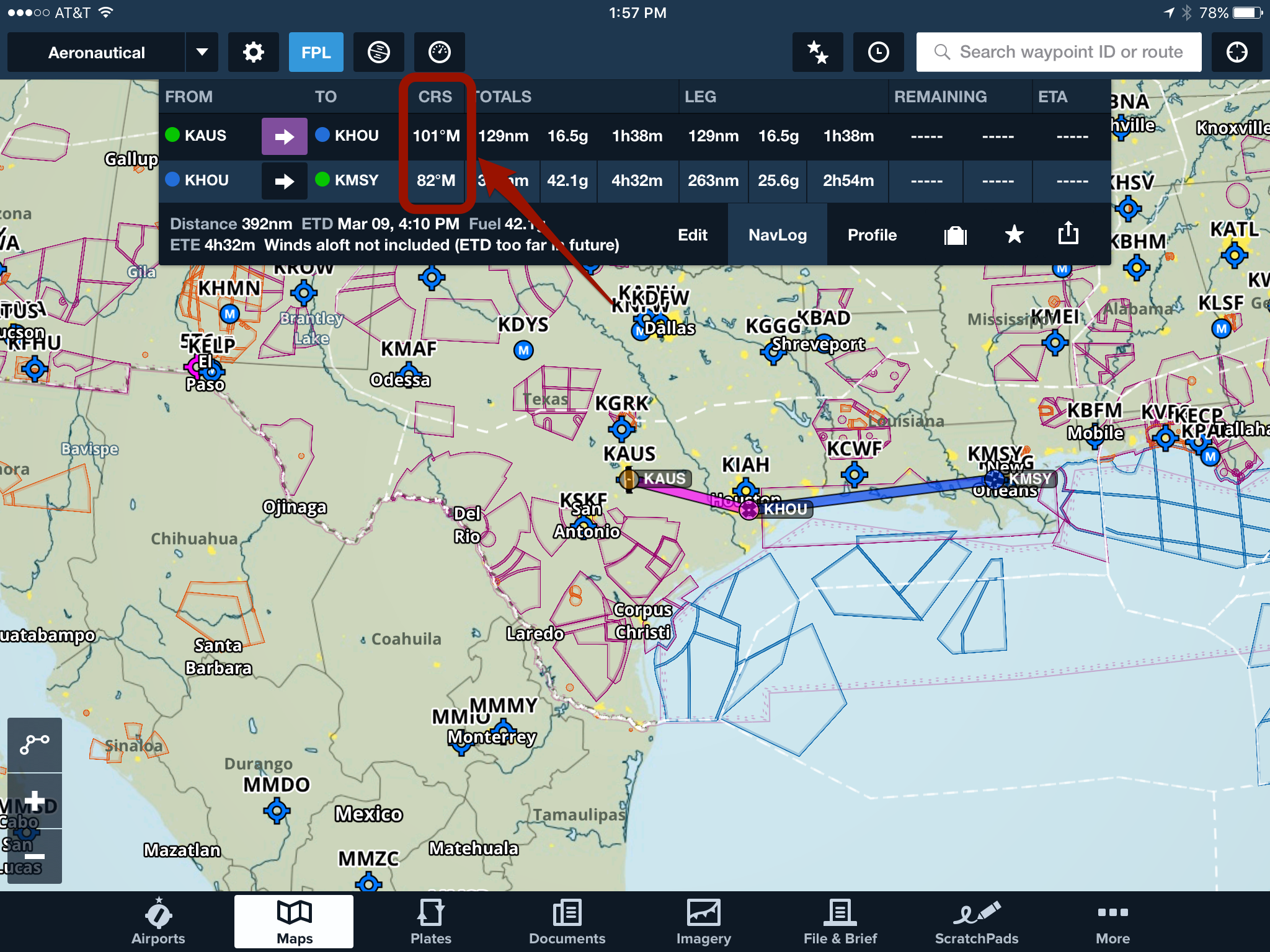
How can I view course (CRS) rather than heading (HDG) in the NavLog? ForeFlight Support

ForeFlight VFR Navigation Log Holladay Aviation
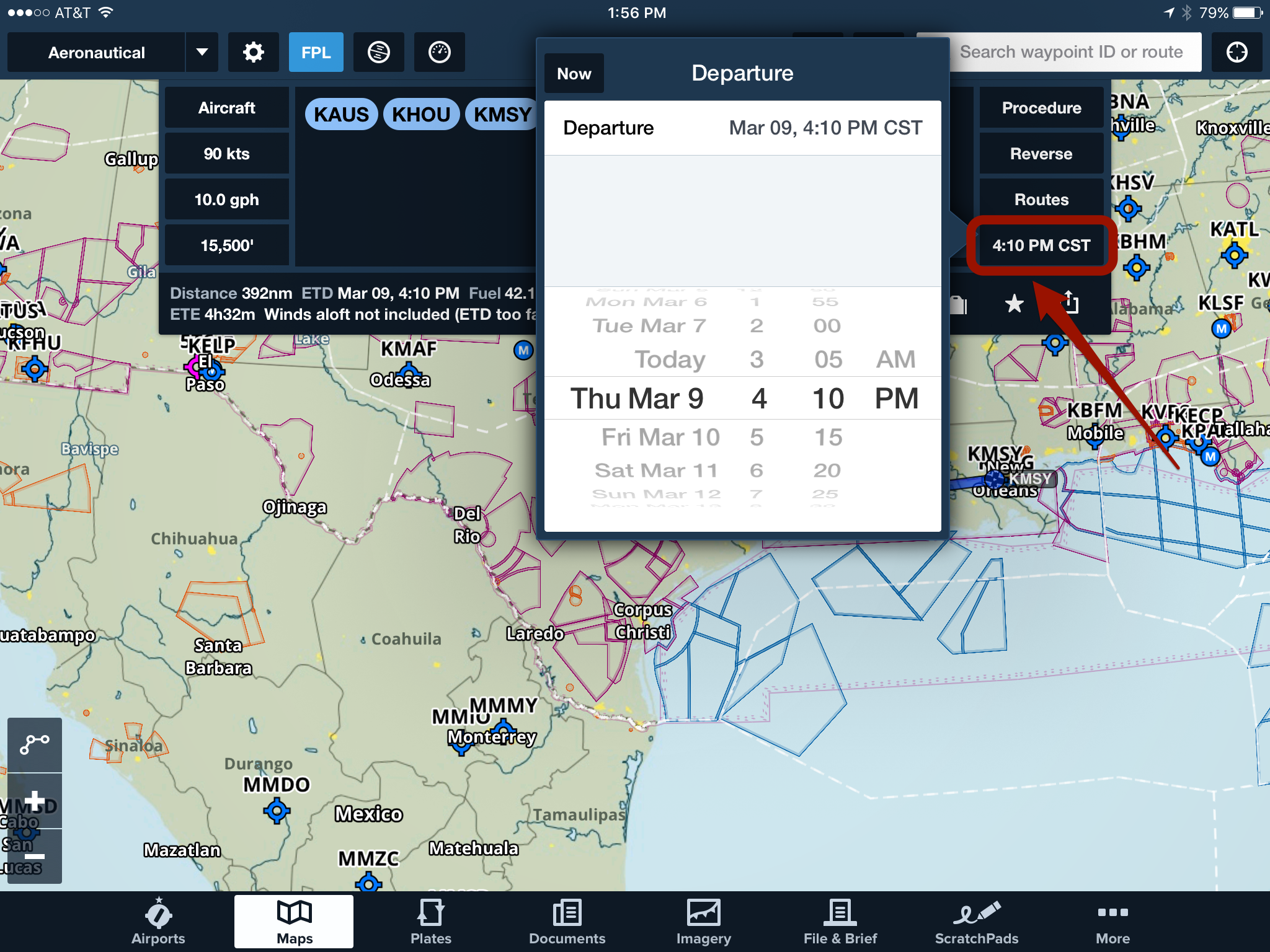
How can I view course (CRS) rather than heading (HDG) in the NavLog? ForeFlight Support

ForeFlight 14.5 adds ability to display True North On Course Aviation LLC

How to Find Your TRUE Climb Gradient ForeFlight Tips YouTube
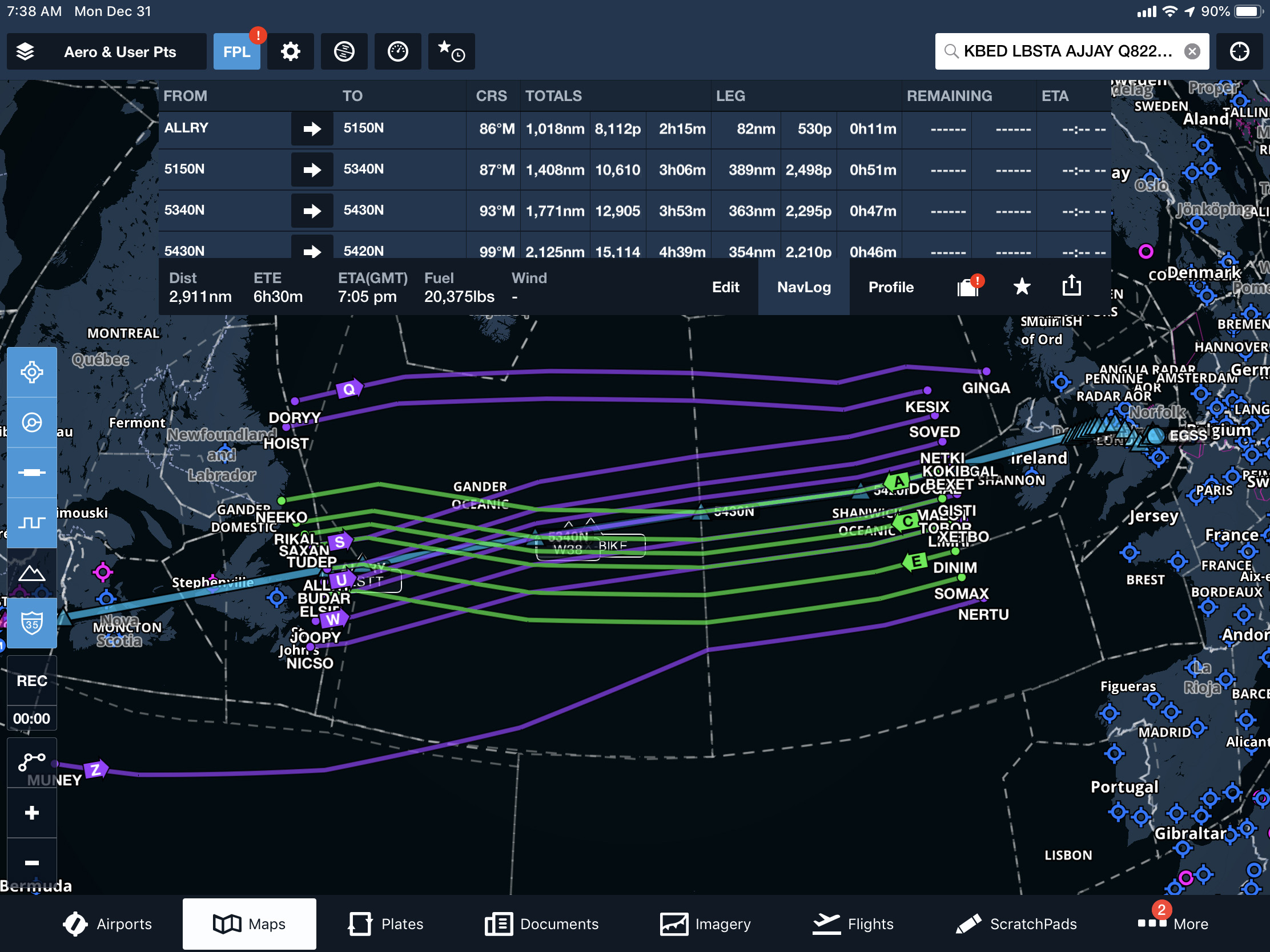
How to Plot, Paperless Methods
It Gives You The True Course Just By Aligning The Center Of The Transparent Protractor With The Waypoint On The Foreflight Map And You Can Rotate It By An Exact # Of Degrees For Magnetic Heading To Read Off The Radials Around A Vor.
To Answer Your Other Question, Forecast Winds And Temperature Aloft Charts (Fd) Are Given In Reference To True North.
The Declination Of The Ocn Vor Is 15E (Determined In 1965.), Making For A Mag Course Of 301, Hence The Use Of The 301 Radial From V23.
Determine The Straight Line Magnetic Course (Not Heading).
Related Post: