
Life-Course-Persistent Offenders
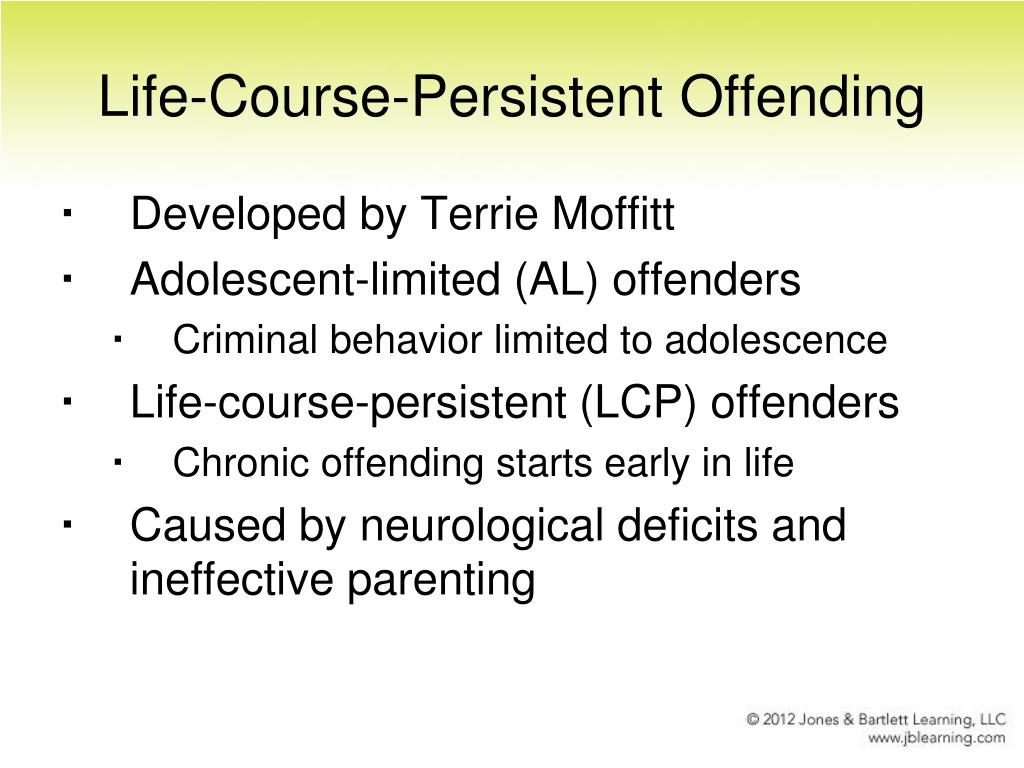
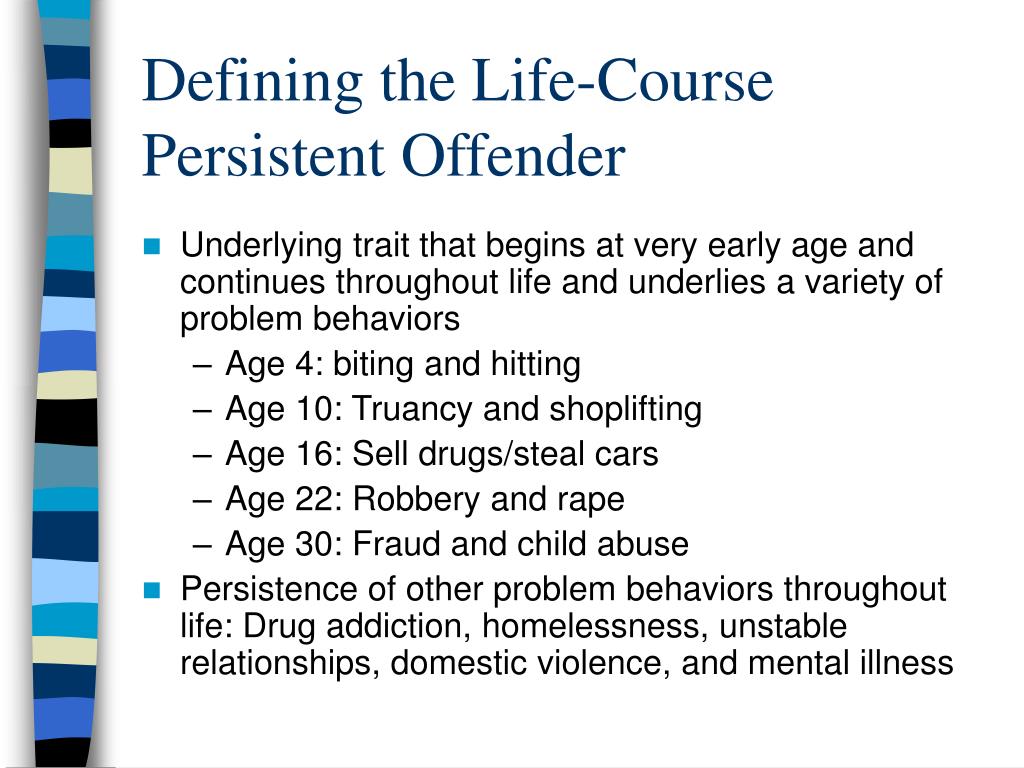
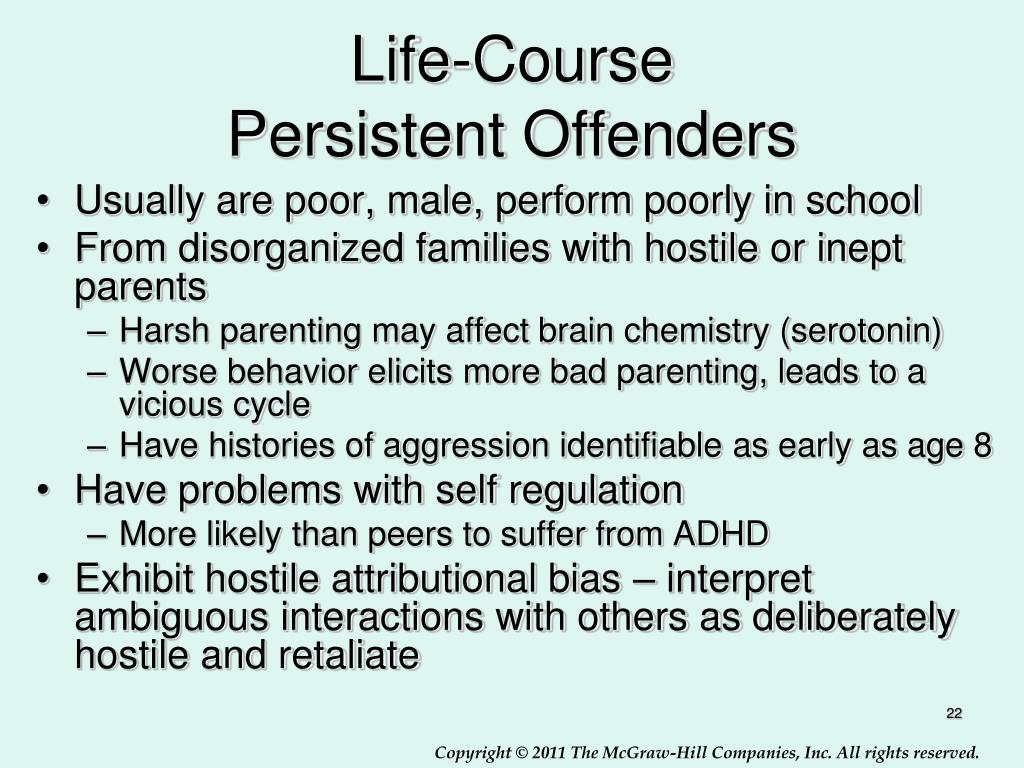
Life-Course-Persistent Offenders - Moffitt attributes the behavioural abnormalities of the lifecourse persistent offender group to neurological deficits. Lawmakers now agree that young offenders deserve one. Timing and duration associated with the course of antisocial involvement are the defining features of the two types of offenders. This chapter reviews 10 years of research into a developmental taxonomy of antisocial behavior that proposed two primary hypothetical prototypes: Identification of the risk factors underlying impulsivity related to violent acts is an essential component of risk assessment and management to reduce violent offending. This chapter reviews 10 years of research on a developmental taxonomy of antisocial behavior that proposed two primary hypothetical prototypes: With the passage of legislation in 2019 and 2023, illinois banned life sentences without the possibility of parole for most offenders who were under 21 at the age of their crimes. In contrast to the small group of life course persistent antisocial. Developmental and life course theories have focused on the transitions, experiences, and changes that occur during young adulthood that help explain the dimensions of participation,. For females, persistent offending was. Developmental and life course theories have focused on the transitions, experiences, and changes that occur during young adulthood that help explain the dimensions of participation,. For males, persistent offending was associated with heavy drinking from adolescence to middle age, diffuse identity, high divorce rates and poverty. However, the adolescence limited offender group has no neurological. In a 2003 paper, robert j. With the passage of legislation in 2019 and 2023, illinois banned life sentences without the possibility of parole for most offenders who were under 21 at the age of their crimes. This chapter reviews 10 years of research on a developmental taxonomy of antisocial behavior that proposed two primary hypothetical prototypes: Moffitt attributes the behavioural abnormalities of the lifecourse persistent offender group to neurological deficits. In contrast to the small group of life course persistent antisocial. Timing and duration associated with the course of antisocial involvement are the defining features of the two types of offenders. With the passage of legislation in 2019 and 2023, illinois banned life sentences without the possibility of parole for. For males, persistent offending was associated with heavy drinking from adolescence to middle age, diffuse identity, high divorce rates and poverty. In contrast to the small group of life course persistent antisocial. In a 2003 paper, robert j. Moffitt attributes the behavioural abnormalities of the lifecourse persistent offender group to neurological deficits. However, the adolescence limited offender group has no. Lawmakers now agree that young offenders deserve one. Identification of the risk factors underlying impulsivity related to violent acts is an essential component of risk assessment and management to reduce violent offending. However, the adolescence limited offender group has no neurological. With the passage of legislation in 2019 and 2023, illinois banned life sentences without the possibility of parole for.. For males, persistent offending was associated with heavy drinking from adolescence to middle age, diffuse identity, high divorce rates and poverty. Moffitt attributes the behavioural abnormalities of the lifecourse persistent offender group to neurological deficits. In a 2003 paper, robert j. This chapter reviews 10 years of research on a developmental taxonomy of antisocial behavior that proposed two primary hypothetical. In a 2003 paper, robert j. With the passage of legislation in 2019 and 2023, illinois banned life sentences without the possibility of parole for most offenders who were under 21 at the age of their crimes. For males, persistent offending was associated with heavy drinking from adolescence to middle age, diffuse identity, high divorce rates and poverty. In contrast. For females, persistent offending was. However, the adolescence limited offender group has no neurological. Identification of the risk factors underlying impulsivity related to violent acts is an essential component of risk assessment and management to reduce violent offending. With the passage of legislation in 2019 and 2023, illinois banned life sentences without the possibility of parole for most offenders who. Timing and duration associated with the course of antisocial involvement are the defining features of the two types of offenders. Moffitt attributes the behavioural abnormalities of the lifecourse persistent offender group to neurological deficits. This chapter reviews 10 years of research into a developmental taxonomy of antisocial behavior that proposed two primary hypothetical prototypes: This chapter reviews 10 years of. This chapter reviews 10 years of research on a developmental taxonomy of antisocial behavior that proposed two primary hypothetical prototypes: With the passage of legislation in 2019 and 2023, illinois banned life sentences without the possibility of parole for most offenders who were under 21 at the age of their crimes. Identification of the risk factors underlying impulsivity related to. This chapter reviews 10 years of research into a developmental taxonomy of antisocial behavior that proposed two primary hypothetical prototypes: However, the adolescence limited offender group has no neurological. Identification of the risk factors underlying impulsivity related to violent acts is an essential component of risk assessment and management to reduce violent offending. Developmental and life course theories have focused. In contrast to the small group of life course persistent antisocial. Moffitt attributes the behavioural abnormalities of the lifecourse persistent offender group to neurological deficits. However, the adolescence limited offender group has no neurological. With the passage of legislation in 2019 and 2023, illinois banned life sentences without the possibility of parole for. Timing and duration associated with the course. However, the adolescence limited offender group has no neurological. Moffitt attributes the behavioural abnormalities of the lifecourse persistent offender group to neurological deficits. Timing and duration associated with the course of antisocial involvement are the defining features of the two types of offenders. With the passage of legislation in 2019 and 2023, illinois banned life sentences without the possibility of. In a 2003 paper, robert j. Lawmakers now agree that young offenders deserve one. For females, persistent offending was. For males, persistent offending was associated with heavy drinking from adolescence to middle age, diffuse identity, high divorce rates and poverty. This chapter reviews 10 years of research into a developmental taxonomy of antisocial behavior that proposed two primary hypothetical prototypes: Developmental and life course theories have focused on the transitions, experiences, and changes that occur during young adulthood that help explain the dimensions of participation,. However, the adolescence limited offender group has no neurological. This chapter reviews 10 years of research on a developmental taxonomy of antisocial behavior that proposed two primary hypothetical prototypes: Timing and duration associated with the course of antisocial involvement are the defining features of the two types of offenders. Identification of the risk factors underlying impulsivity related to violent acts is an essential component of risk assessment and management to reduce violent offending. With the passage of legislation in 2019 and 2023, illinois banned life sentences without the possibility of parole for most offenders who were under 21 at the age of their crimes.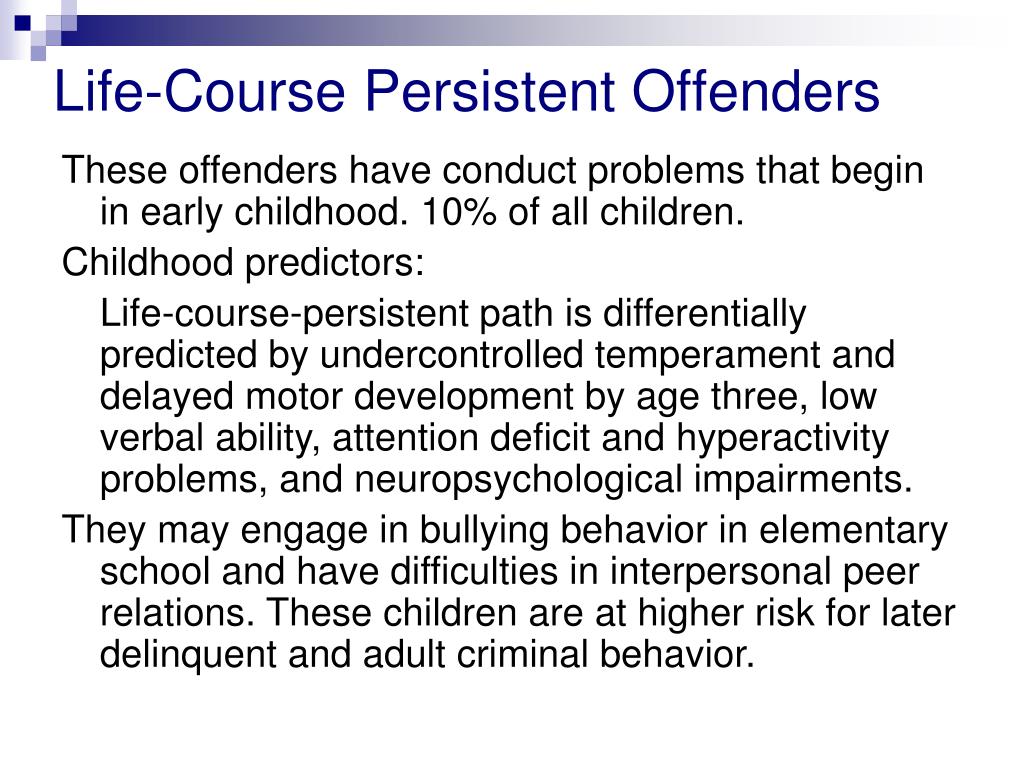
PPT Juveniles in the Legal System PowerPoint Presentation, free

LifeCourse Persistent Offenders and the Propensity to Commit Sexual
PPT Chapter 4 Biology and Crime PowerPoint Presentation, free

Developmental Theories Life Course and Latent Trait ppt download

LifeCourse Persistent Offenders and the

Figure 1 from Sociocognitive differences between Moffitt's taxonomy of
PPT Theories of Juvenile Delinquency PowerPoint Presentation, free

PPT Developmental Theories Crime and the Life Course PowerPoint
PPT Chapter Thirteen Psychosocial Problems in Adolescence PowerPoint
(PDF) LifeCourse Persistent Offenders and the Propensity to Commit
Moffitt Attributes The Behavioural Abnormalities Of The Lifecourse Persistent Offender Group To Neurological Deficits.
In Contrast To The Small Group Of Life Course Persistent Antisocial.
With The Passage Of Legislation In 2019 And 2023, Illinois Banned Life Sentences Without The Possibility Of Parole For.
Related Post: