
What Is Holder In Due Course
What Is Holder In Due Course - The preservation of consumers’ claims and defenses [holder in due course rule], formally known as the trade regulation rule concerning preservation of consumers' claims and. This means that the holder. A holder in due course is any person who receives or holds a negotiable instrument such as a check or promissory note in good faith and in exchange for value; If the instrument is later found not to be payable as written, a holder in due course can enforce payment by the person who originated it and all previous holders, regardless of any competing claims those parties may have against each other. A holder in due course is the person or entity who is allowed to sue on the note to recover money due. A holder in due course is someone who has taken good faith possession of a negotiable instrument. (1) the instrument when issued or negotiated to the holder does not bear such apparent evidence of forgery or alteration or is not otherwise so irregular or incomplete as to. This right shields a holder in due course from the risk of ta… The holder in due course is often considered innocent of any claims. A holder in due course is someone who exchanges something of value for the right to collect on a debt. What the holder in due course gets is an instrument free of claims or defenses by previous possessors. A holder in due course (hdc) is a specific type of holder of a negotiable instrument. A holder in due course is a person who receives or holds a negotiable instrument, such as a check or promissory note, in good faith and in exchange for value. The rule often referred to as the holder in due course rule is actually titled preservation of consumer claims and defenses. it is a rule issued by the federal trade. A 'holder in due course' is a term used in the world of finance and law. (1) the instrument when issued or negotiated to the holder does not bear such apparent evidence of forgery or alteration or is not otherwise so irregular or incomplete as to. A holder in due course is someone who has taken good faith possession of a negotiable instrument. The preservation of consumers’ claims and defenses [holder in due course rule], formally known as the trade regulation rule concerning preservation of consumers' claims and. A holder in due course is the person or entity who is allowed to sue on the note to recover money due. It refers to a person who has received a specific type of document, known as a 'negotiable instrument', in good faith. According to section 9 of the negotiable instruments act, a. The preservation of consumers’ claims and defenses [holder in due course rule], formally known as the trade regulation rule concerning preservation of consumers' claims and. A holder in due course is a person who receives or holds a negotiable instrument, such as a check or promissory note, in good faith. A holder in due course is the person or entity who is allowed to sue on the note to recover money due. A holder in due course is someone who exchanges something of value for the right to collect on a debt. The rule often referred to as the holder in due course rule is actually titled preservation of consumer. A holder in due course is someone who has obtained a negotiable instrument in a proper way. What the holder in due course gets is an instrument free of claims or defenses by previous possessors. A holder in due course is someone who exchanges something of value for the right to collect on a debt. A 'holder in due course'. The ucc protects the rights of the hdc. This includes having it transferred to them, paying for it, and receiving it without knowing about. (1) the instrument when issued or negotiated to the holder does not bear such apparent evidence of forgery or alteration or is not otherwise so irregular or incomplete as to. Section under the ni act, 1881.. A holder in due course is someone who has obtained a negotiable instrument in a proper way. A holder in due course (hdc) is a specific type of holder of a negotiable instrument. A holder in due course is the person or entity who is allowed to sue on the note to recover money due. What the holder in due. A holder with such a preferred position can then treat the instrument. The preservation of consumers’ claims and defenses [holder in due course rule], formally known as the trade regulation rule concerning preservation of consumers' claims and. Under ucc article 3, a holder in due course is someone who acquires a negotiable instrument in good faith, for value, and without. The holder in due course is often considered innocent of any claims. What is a holder in due course? A holder in due course is any person who receives or holds a negotiable instrument such as a check or promissory note in good faith and in exchange for value; This includes having it transferred to them, paying for it, and. (1) the instrument when issued or negotiated to the holder does not bear such apparent evidence of forgery or alteration or is not otherwise so irregular or incomplete as to. (1) the instrument when issued or. If the instrument is later found not to be payable as written, a holder in due course can enforce payment by the person who. This includes having it transferred to them, paying for it, and receiving it without knowing about. What is a holder in due course? This means that the holder. It refers to a person who has received a specific type of document, known as a 'negotiable instrument', in good faith. A holder in due course (hdc) is a specific type of. What the holder in due course gets is an instrument free of claims or defenses by previous possessors. The holder in due course is often considered innocent of any claims. A holder in due course is a person who receives or holds a negotiable instrument, such as a check or promissory note, in good faith and in exchange for value.. A holder in due course may or may not be the original lender, and often,. This right shields a holder in due course from the risk of ta… The preservation of consumers’ claims and defenses [holder in due course rule], formally known as the trade regulation rule concerning preservation of consumers' claims and. The ucc protects the rights of the hdc. A holder in due course is someone who has obtained a negotiable instrument in a proper way. A 'holder in due course' is a term used in the world of finance and law. A holder in due course is someone who has taken good faith possession of a negotiable instrument. If the instrument is later found not to be payable as written, a holder in due course can enforce payment by the person who originated it and all previous holders, regardless of any competing claims those parties may have against each other. Section under the ni act, 1881. This includes having it transferred to them, paying for it, and receiving it without knowing about. What is a holder in due course? The rule often referred to as the holder in due course rule is actually titled preservation of consumer claims and defenses. it is a rule issued by the federal trade. What the holder in due course gets is an instrument free of claims or defenses by previous possessors. A holder in due course is the person or entity who is allowed to sue on the note to recover money due. A holder in due course is a person who acquires the instrument for consideration before maturity, in good faith, without knowing defects. A holder with such a preferred position can then treat the instrument.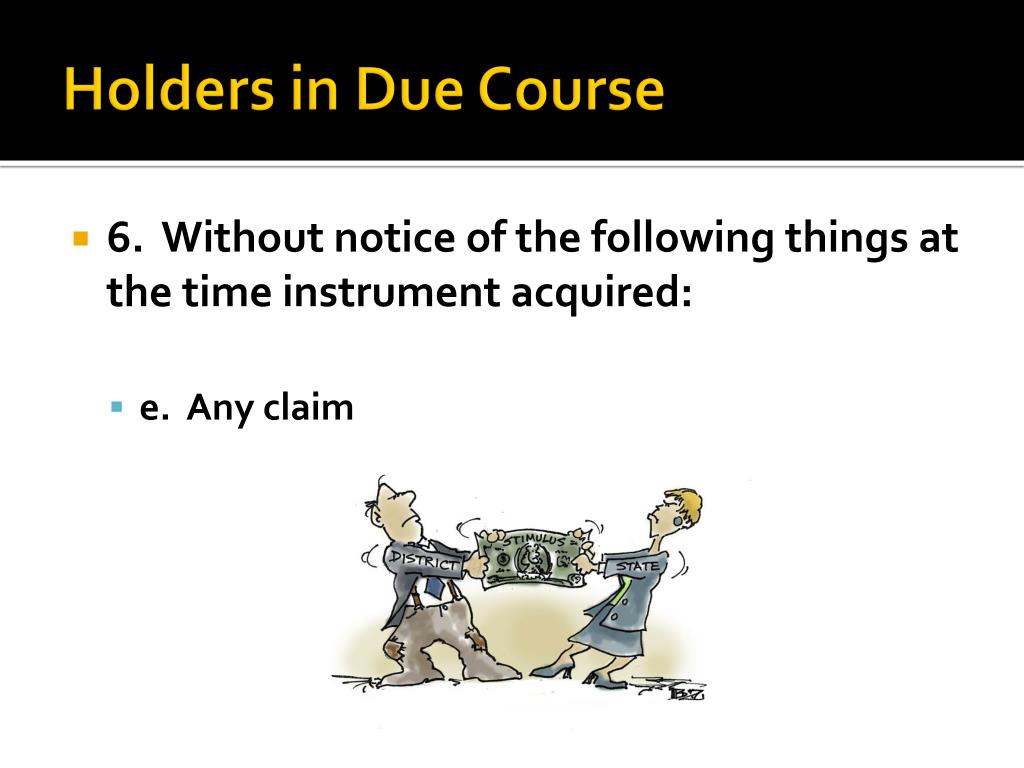
PPT Holders in Due Course PowerPoint Presentation, free download ID
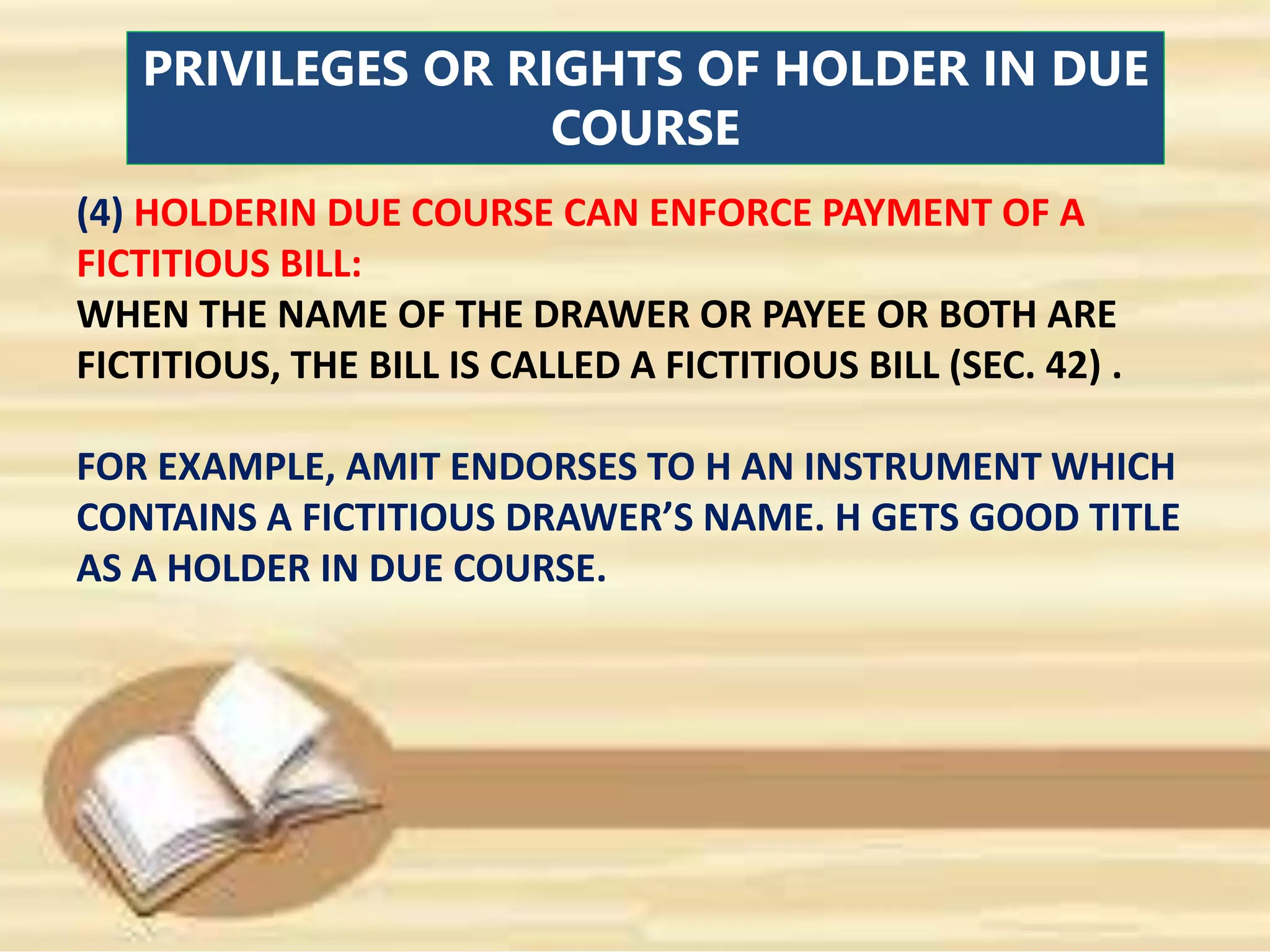
HOLDER IN DUE COURSE NEGOTIABLE INSTRUMENT.pptx
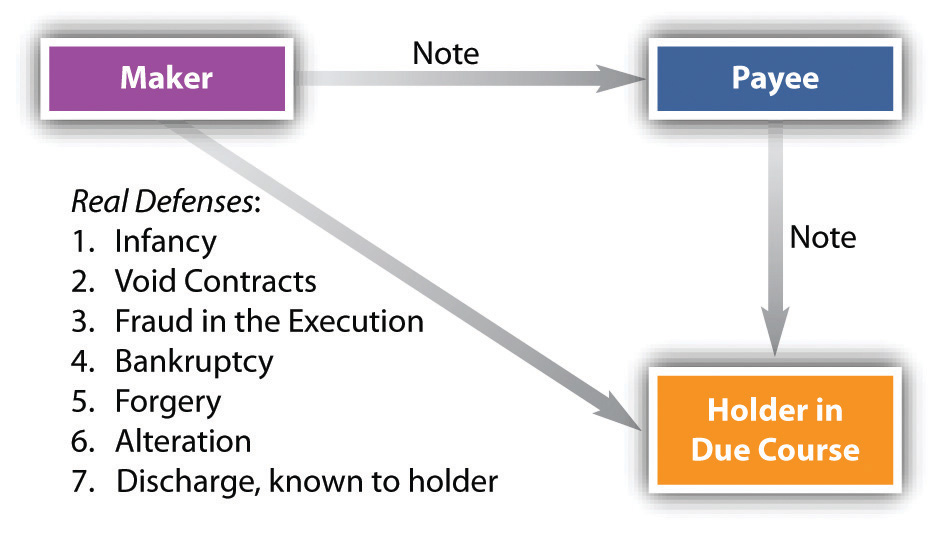
Holder in Due Course and Defenses
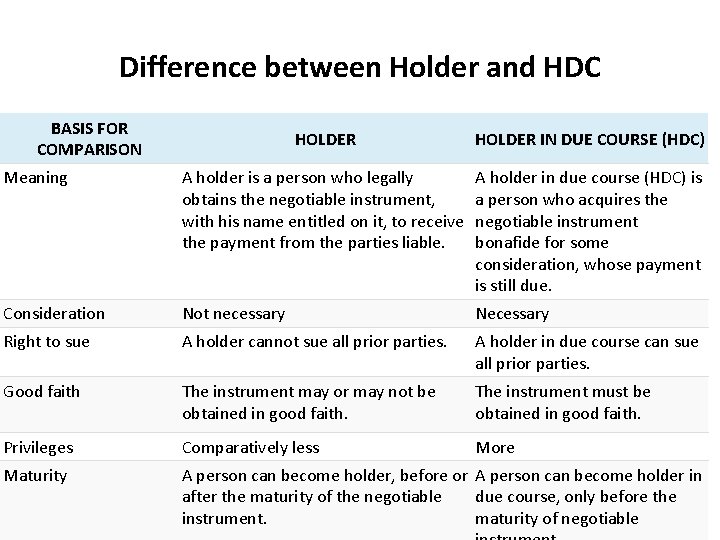
Holder and Holder in Due course Dr Manish
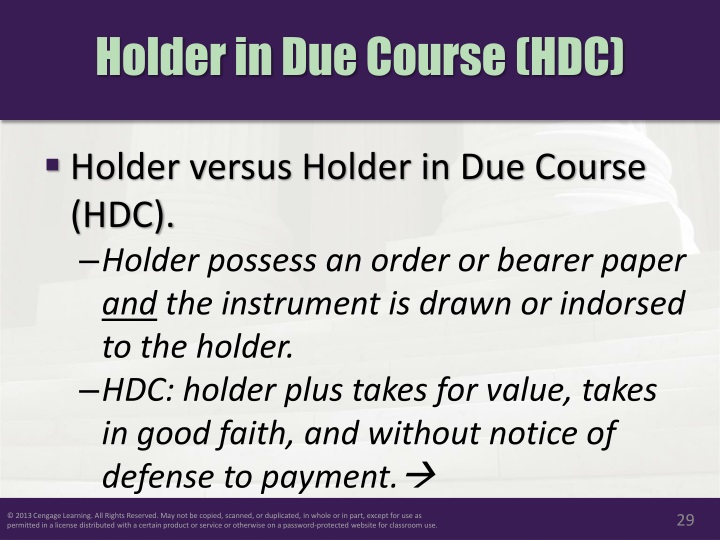
PPT Chapter 16 Negotiability, Transferability, and Liability
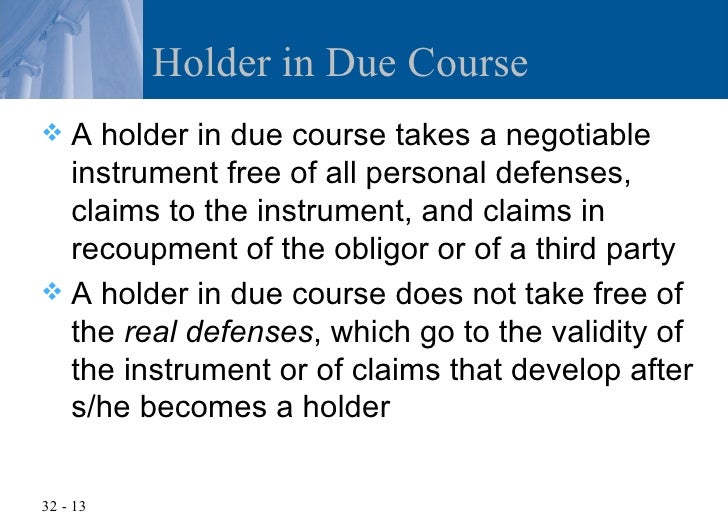
Chapter 32 Negotiation and Holder in Due Course

Holder in Due Course
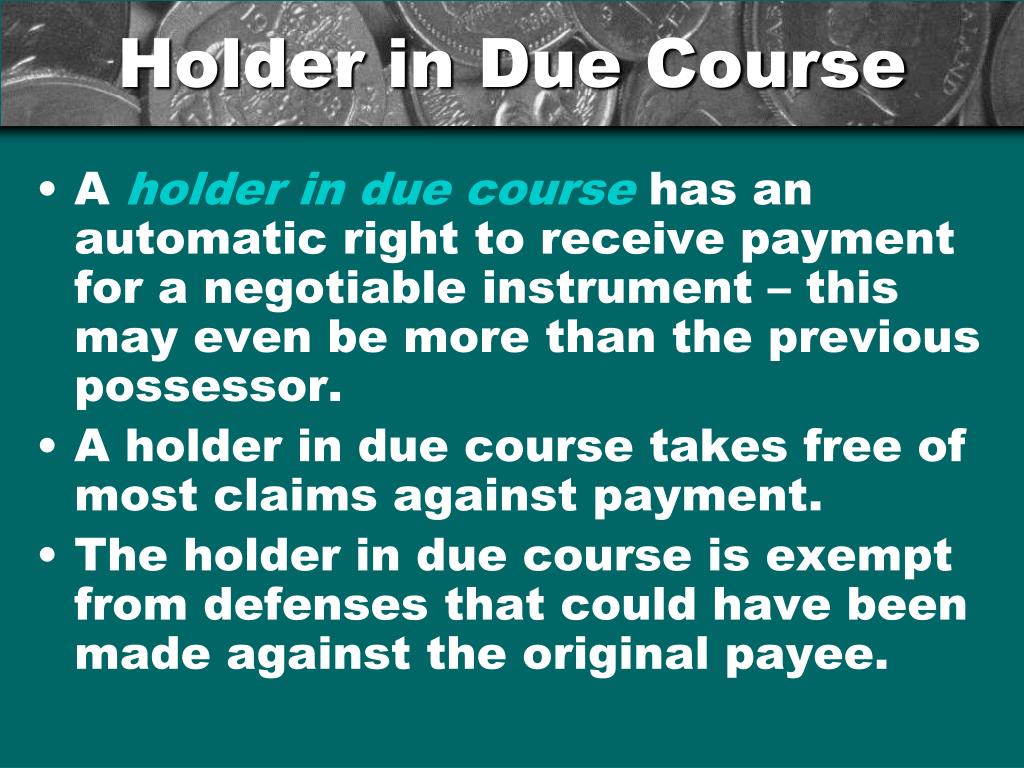
PPT UCC 3 & 9A PowerPoint Presentation, free download ID6697270
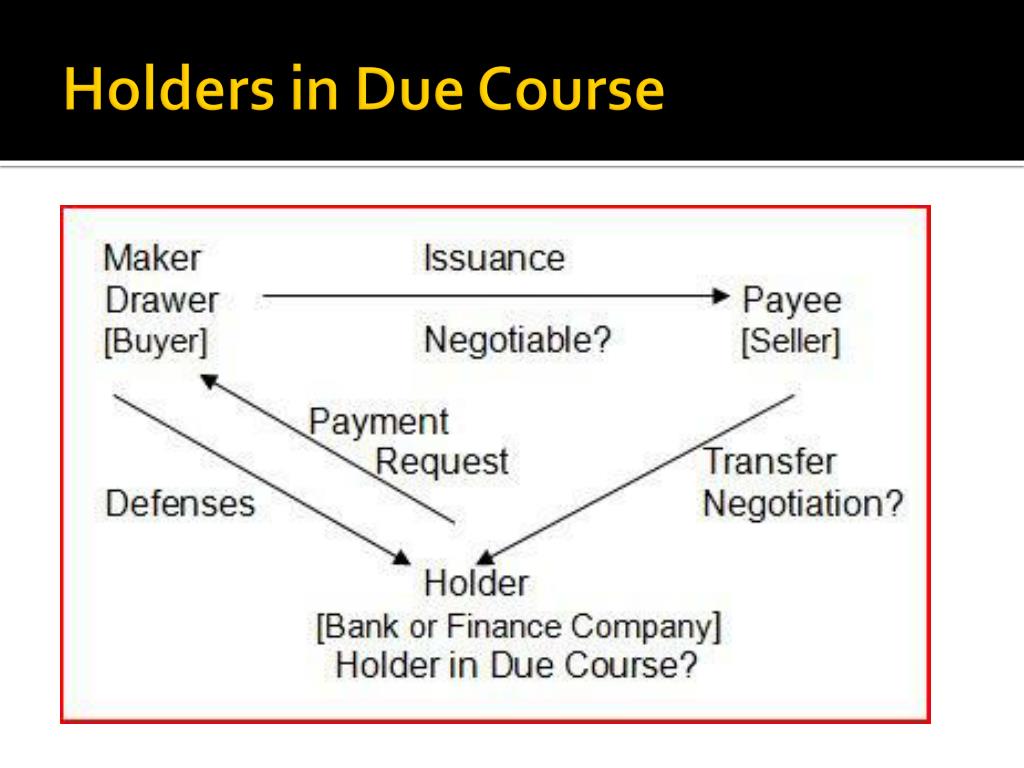
Holder In Due Course Section 9 at Debi Combs blog
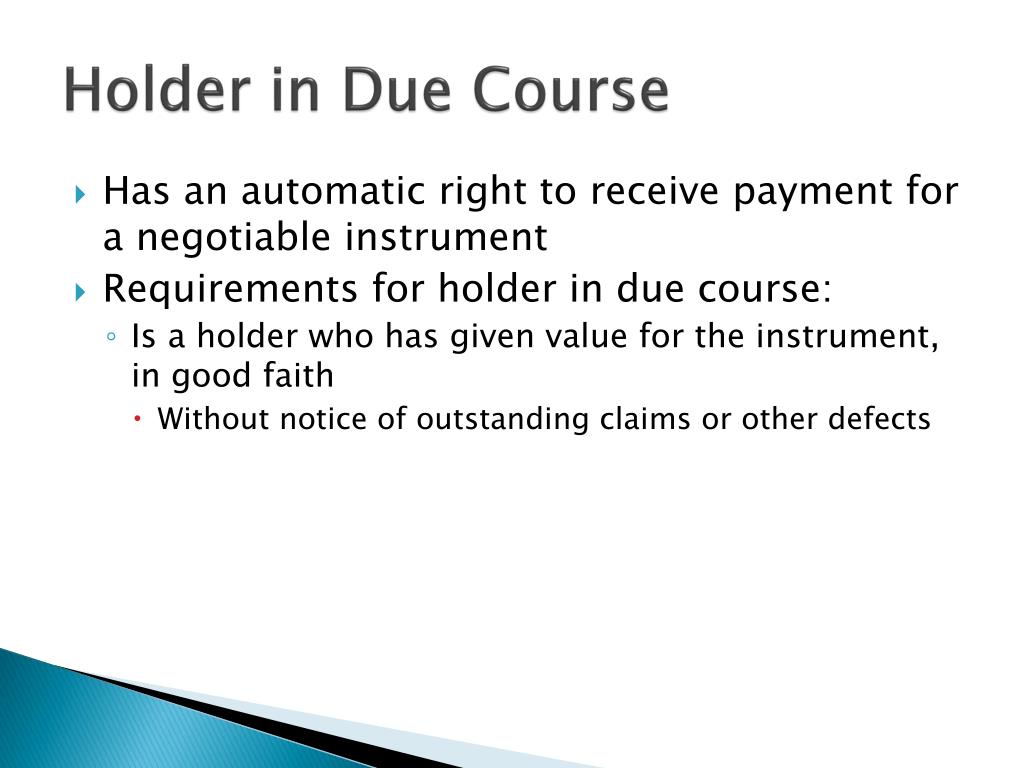
PPT Chapter 14 PowerPoint Presentation, free download ID7043922
It Refers To A Person Who Has Received A Specific Type Of Document, Known As A 'Negotiable Instrument', In Good Faith.
(1) The Instrument When Issued Or Negotiated To The Holder Does Not Bear Such Apparent Evidence Of Forgery Or Alteration Or Is Not Otherwise So Irregular Or Incomplete As To.
A Holder In Due Course Is Any Person Who Receives Or Holds A Negotiable Instrument Such As A Check Or Promissory Note In Good Faith And In Exchange For Value;
The Holder In Due Course Is Often Considered Innocent Of Any Claims.
Related Post: